

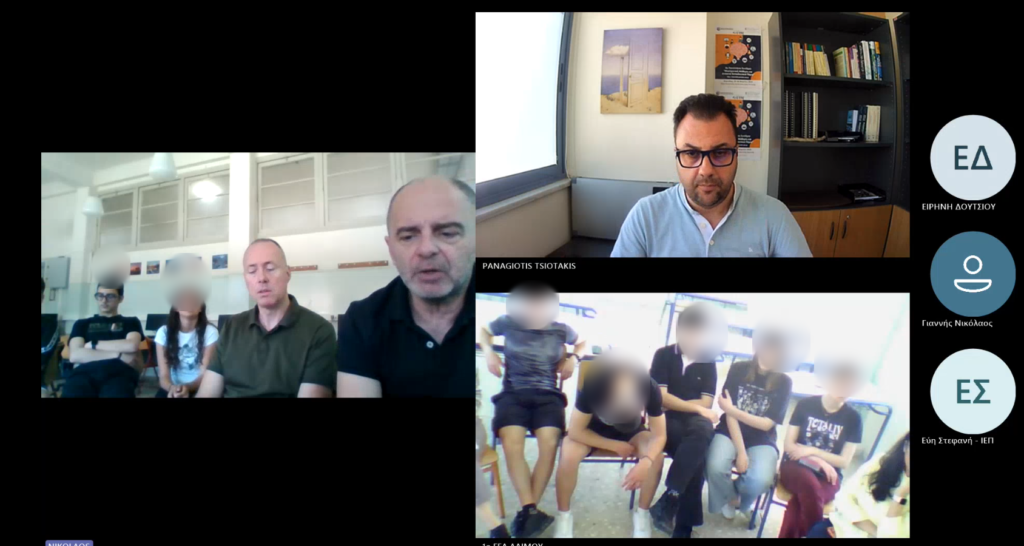
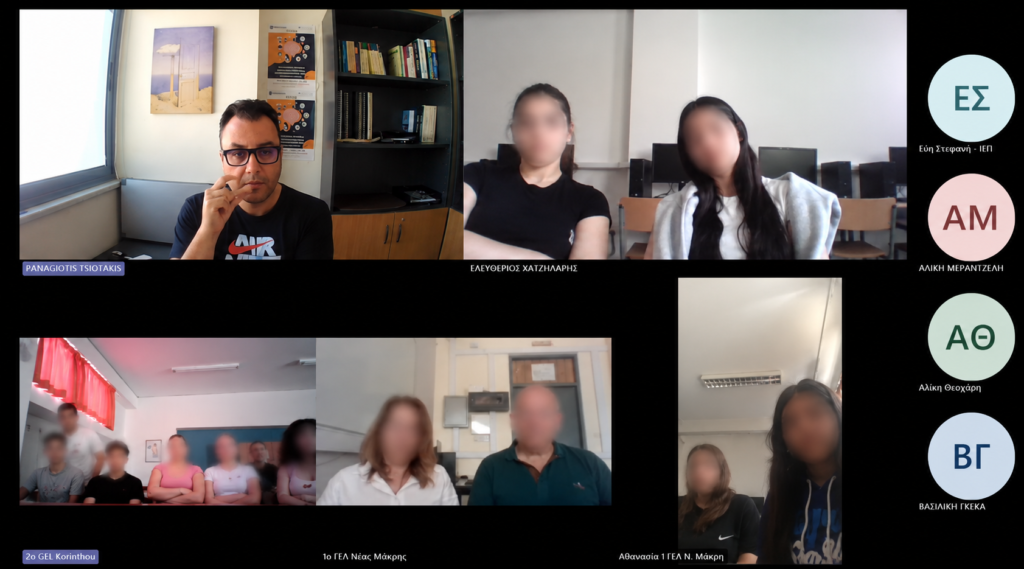
Between 6 and 12 May 2026, the VR4Empathy project organised four online National Round Tables in Greece, bringing together 20 teachers and 33 students from eight secondary schools. Coordinated by the University of the Peloponnese (UoP) and the Institute of Educational Policy (IEP), the sessions provided a valuable opportunity to reflect on the pilot implementation of VR-based learning activities and gather feedback to support the continuous improvement of the project’s Quality Assurance Framework (QAF).
The online format enabled schools from Athens and Corinth to exchange experiences, compare classroom practices and discuss how immersive technologies can be effectively integrated into teaching and learning.
🎓 High engagement through immersive learning
Teachers highlighted the positive impact of virtual reality on student engagement, describing it as a powerful experiential learning tool that promotes active participation and meaningful learning. At the same time, they emphasised that VR delivers the greatest educational value when embedded within a structured learning sequence that includes preparation, teacher guidance, collaborative discussion and reflection.
Students also responded positively, describing the VR activities as interactive, immersive and engaging. Many reported that the combination of the immersive experience and the follow-up discussions helped them better understand different perspectives and develop cognitive empathy.
💙 Supporting inclusive and learner-centred experiences
Discussions also reinforced the importance of ensuring that VR activities are accessible and comfortable for all learners. Teachers recommended keeping VR sessions relatively short, scheduling regular breaks and allowing students to opt out whenever they felt uncomfortable. Alternative ways of accessing the learning content, such as viewing the videos on standard screens, proved effective in supporting students who preferred not to use the headsets.
📋 Positive feedback on the Quality Assurance Framework
Participants recognised the Quality Assurance Framework as a valuable resource for supporting the pedagogical, organisational and ethical implementation of VR in schools. Although many teachers had limited time to explore the framework in detail, they considered it comprehensive and relevant for guiding future classroom practice.
⚙️ Contributions to the Quality Assurance Framework
The round tables generated a range of practical recommendations that will contribute to the continuous refinement of the QAF and support future implementations of VR-based learning.
Teachers highlighted the importance of:
- planning complementary learning activities for students while a limited number of VR headsets are being used, ensuring that all learners remain actively engaged throughout the lesson;
- maintaining flexible lesson plans that can be adapted to different classroom contexts, national curricula and available teaching time;
- pre-configuring VR equipment, whenever possible, with the support of IT staff before classroom implementation;
- carrying out technical checks before lessons to facilitate smooth delivery of activities;
- preparing alternative non-VR learning activities to ensure continuity in the event of connectivity or equipment issues.
🚀 Next Steps
The insights gathered during the Greek National Round Tables will help further strengthen both the VR4Empathy methodology and its Quality Assurance Framework, ensuring that future implementations continue to promote high-quality, inclusive and pedagogically meaningful immersive learning experiences across European schools. The recommendations collected from teachers and students will directly inform the project’s next stages, contributing to the wider adoption of virtual reality in education.
Follow VR4Empathy on LinkedIn and Facebook for the latest updates!


